
Table of Contents
For businesses that rely on consistent printing output, unexpected printer issues can quickly slow operations, delay production, and create costly interruptions. Whether it is a wide-format printer, plotter, or high-volume business printing system, downtime often affects deadlines, workflow, and overall efficiency. That is why preventive maintenance plays a major role in downtime reduction for businesses with demanding print environments.
A structured maintenance strategy helps reduce breakdowns, improve printer reliability, and extend equipment life. For companies that depend on continuous printing operations, preventive maintenance is not just about repairs. It is about protecting productivity.
Here is how preventive maintenance supports printer uptime and long-term operational efficiency.
Why Printer Downtime Impacts Business Performance
Printer downtime may seem like a technical issue, but it often creates larger business challenges.
When printers stop functioning properly, businesses may experience:
- Delayed project timelines
- Reduced employee productivity
- Higher repair costs
- Missed client deadlines
- Lower print quality
- Emergency service interruptions
For industries that depend on large-format printing, engineering plans, production printing, or commercial graphics, even small disruptions can quickly escalate.
This is why downtime reduction should be part of a broader equipment maintenance strategy.
What Is Preventive Maintenance?
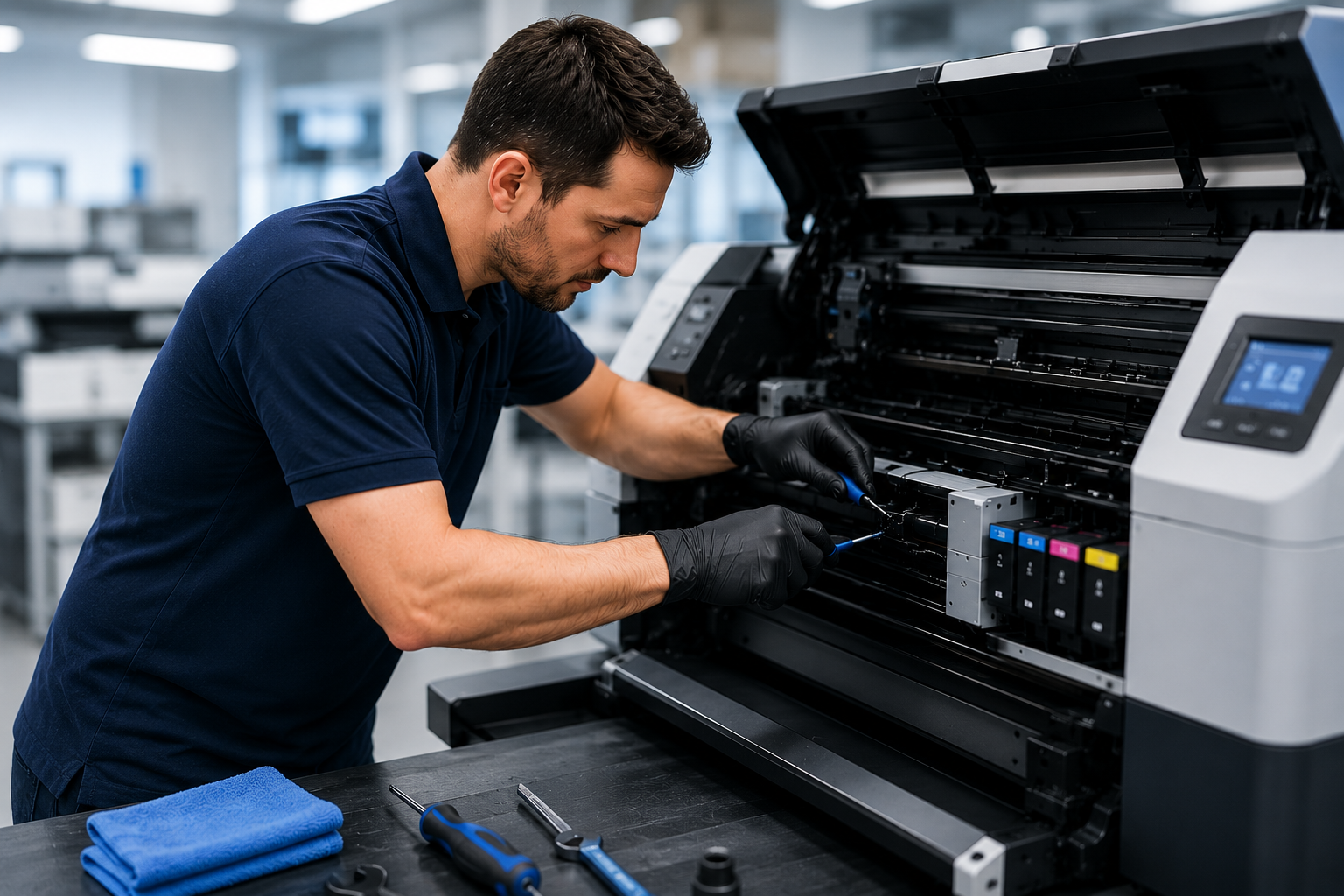
Preventive maintenance is the process of regularly inspecting, cleaning, adjusting, and servicing equipment before major failures happen.
Similar to preventive maintenance in broader industrial systems, businesses use scheduled servicing to avoid breakdowns and improve reliability. The same concept applies to commercial printers and plotters.
Routine maintenance can include cleaning components, checking wear parts, updating software, and monitoring machine performance. Like broader industrial preventive maintenance strategies, proactive servicing reduces risk and supports long-term efficiency.
Catching Small Issues Before They Become Expensive Problems
Many major printer failures begin as small overlooked issues.
Dust buildup, worn rollers, clogged print heads, alignment problems, or aging components may seem minor at first. Over time, these can lead to poor print quality, recurring jams, or complete machine shutdown.
Preventive maintenance helps businesses identify these warning signs early.
Routine inspections may include:
- Checking rollers and feed systems
- Inspecting print heads
- Monitoring unusual noises
- Reviewing calibration
- Checking error messages
- Looking for wear on moving parts
This early detection is one of the strongest contributors to downtime reduction.
Improving Equipment Lifespan
Business printers are a major operational investment.
Without regular maintenance, excessive wear can shorten equipment lifespan and increase replacement costs.
Preventive maintenance supports:
- Better internal component performance
- Reduced overheating
- Less strain on motors and moving systems
- Cleaner mechanical operation
- Improved print consistency
High-volume businesses that maintain printers regularly often experience fewer major repairs and longer equipment life.
For businesses needing structured support, professional printer maintenance programs can help maintain consistency.
Reducing Unexpected Service Interruptions
Reactive repairs often happen at the worst possible time.
A printer failure during peak production can stop projects, delay deliveries, and create customer frustration.
Preventive servicing reduces surprise breakdowns by keeping machines operating within healthy performance ranges.
Routine maintenance often includes:
- Firmware updates
- Lubrication where needed
- Cleaning internal systems
- Replacing worn parts
- Connectivity checks
- Performance testing
These actions support smoother daily operations and stronger downtime reduction over time.
Supporting Better Print Quality and Efficiency
Printer reliability is not only about staying online. It also affects output quality.
Poorly maintained printers may produce:
- Streaking
- Faded colours
- Misalignment
- Feeding errors
- Inconsistent prints
- Wasted materials
Preventive maintenance improves quality control and reduces waste.
This is especially important for businesses using high-volume systems where printing quality directly affects customer satisfaction and project accuracy.
Training Employees to Prevent Avoidable Downtime
Some downtime comes from avoidable misuse.
Incorrect media loading, skipped cleaning, incompatible materials, or poor shutdown habits can contribute to equipment issues.
Staff training should include:
- Proper loading procedures
- Correct material handling
- Cleaning basics
- Reporting warning signs
- Safe startup and shutdown practices
- Monitoring supplies
When employees understand proper equipment handling, businesses reduce preventable disruptions.
For companies installing new systems, professional printer installation services can help support training and long-term care.
Knowing When Professional Repairs Are Necessary
Even with strong maintenance, some problems require technical support.
Businesses should seek service when they notice:
- Repeated paper jams
- Mechanical grinding or unusual sounds
- Recurring calibration failures
- Persistent print defects
- Connectivity issues
- Major performance slowdowns
- Error codes that repeat
Ignoring these signs can increase repair costs and lead to extended downtime.
Fast access to printer repair services helps resolve issues before productivity suffers.
Building a Long-Term Downtime Reduction Strategy
The best maintenance plans are proactive, not reactive.
Businesses should review:
- Printer age and condition
- Service history
- Downtime patterns
- Print volume
- Supply usage
- Repeat issues
- Repair costs
These insights help businesses improve maintenance schedules and identify when upgrades may be needed.
For organisations with high-volume printing operations, long-term downtime reduction supports stronger productivity, lower repair costs, and better operational control.
With structured maintenance and expert support from Bay Plotter, businesses can reduce disruptions and improve print reliability.
Frequently Asked Questions About Downtime Reduction
How does preventive maintenance help with downtime reduction?
Preventive maintenance helps identify small printer issues before they become larger failures. This supports stronger downtime reduction by reducing unexpected breakdowns and improving reliability.
How often should business printers be serviced?
This depends on print volume, machine type, and manufacturer guidelines. High-volume printers often require more frequent inspections and servicing.
What are common causes of printer downtime?
Dust buildup, worn rollers, print head issues, poor maintenance, software problems, and mechanical wear are common causes.
Can employees help reduce printer downtime?
Yes. Proper training in cleaning, loading, and reporting issues can reduce avoidable disruptions.
When should businesses call for printer repair services?
Businesses should seek support when recurring jams, poor print quality, repeated errors, or performance issues appear.