Table of Contents
Printer downtime can disrupt workflows, delay projects, and increase operating costs. Whether a business relies on large-format plotters, multifunction printers, production devices, or office printers, having the right maintenance program in place can make a significant difference in performance, reliability, and long-term costs.
Unfortunately, many organizations wait until equipment breaks down before seeking support. This reactive approach often leads to unexpected expenses, productivity losses, and shortened equipment lifespan.
A well-designed printer maintenance program helps businesses stay ahead of problems, reduce downtime, and maximize the value of their equipment investment. However, choosing the right program requires careful maintenance selection to ensure it aligns with operational needs and budget requirements.
This guide explains what to consider when evaluating printer maintenance programs and how to select the right solution for your organization.
Why Printer Maintenance Matters
Printers and plotters are complex pieces of equipment that experience wear and tear over time. Frequent usage, environmental conditions, paper dust, and aging components can all impact performance.
Without regular maintenance, businesses may experience:
- Frequent paper jams
- Reduced print quality
- Unexpected equipment failures
- Increased repair costs
- Delayed project timelines
- Shortened equipment lifespan
Preventative maintenance helps identify potential issues before they become costly problems. It also keeps equipment operating efficiently and reliably throughout its lifecycle.
Understanding Different Types of Maintenance Programs
Before making a maintenance selection, it is important to understand the different service models available.
Break-Fix Service
This approach involves calling for service only when a problem occurs.
Advantages:
- No ongoing contract costs
- Suitable for low-volume printing environments
Disadvantages:
- Unpredictable repair expenses
- Potentially long downtime
- No preventative maintenance
While break-fix services may appear cost-effective initially, they often become more expensive over time for businesses that rely heavily on their printers.
Preventative Maintenance Programs
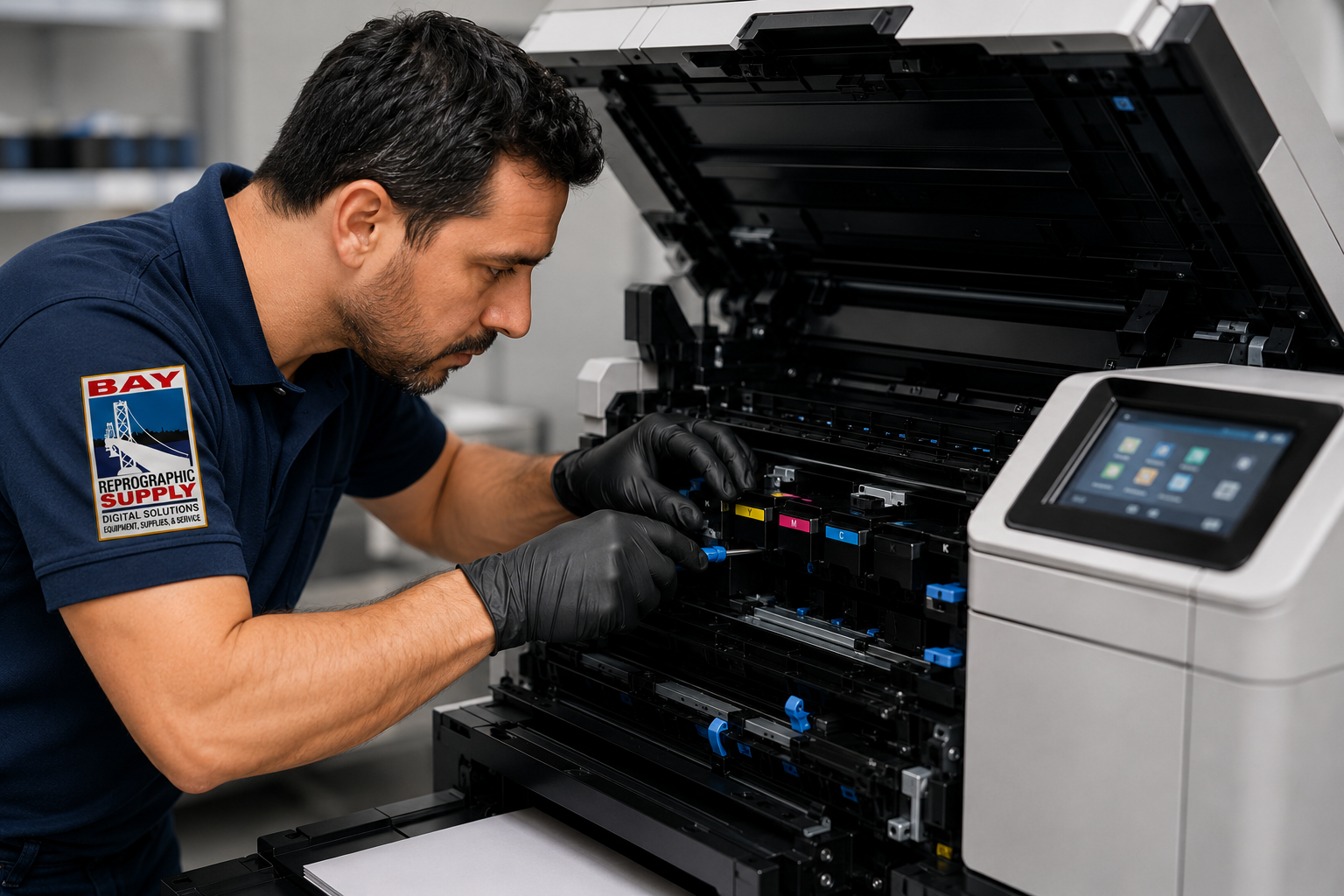
Preventative maintenance programs involve scheduled inspections, cleaning, calibration, and replacement of wear components.
Advantages:
- Reduced risk of unexpected failures
- Improved equipment reliability
- Better print quality
- Longer equipment lifespan
These programs are ideal for organizations that depend on consistent printer performance.
Comprehensive Maintenance Agreements
Comprehensive service agreements typically include:
- Preventative maintenance
- Priority service response
- Technical support
- Parts replacement
- Labor coverage
- Performance monitoring
For businesses with mission-critical printing operations, comprehensive agreements often provide the best balance of reliability and cost control.
Evaluate Your Printing Environment
Every business has different printing requirements. A successful maintenance selection starts with understanding how equipment is used.
Consider the following questions:
How Critical Is Printing to Daily Operations?
If your business relies on printers to produce architectural drawings, engineering plans, construction documents, marketing materials, or customer-facing materials, downtime can have significant consequences.
Organizations with high operational dependence typically benefit from more comprehensive maintenance coverage.
What Is Your Monthly Print Volume?
High-volume environments place more stress on equipment and often require more frequent maintenance.
Businesses printing thousands of pages or large-format documents each month should prioritize preventative maintenance and rapid service response.
How Many Devices Need Coverage?
Some maintenance providers offer programs that cover multiple devices under a single agreement.
This approach can simplify administration while reducing overall service costs.
Compare Service Response Times
One of the most important factors in maintenance selection is response time.
When evaluating maintenance programs, ask:
- How quickly are service calls addressed?
- Are emergency services available?
- Is remote support included?
- Are technicians locally based?
A maintenance provider with fast response times can significantly reduce downtime and help keep operations running smoothly.
Understand What Is Included
Not all maintenance agreements provide the same level of coverage.
Review service contracts carefully and determine whether they include:
Preventative Maintenance Visits
Scheduled maintenance visits help identify issues early and keep equipment operating efficiently.
Parts Coverage
Replacement parts can be one of the largest repair expenses. Some programs include parts, while others charge separately.
Labor Costs
Verify whether labor is fully covered or billed as an additional expense.
Software and Firmware Updates
Keeping equipment updated can improve performance, security, and compatibility.
Remote Diagnostics
Many modern printers allow technicians to diagnose issues remotely, reducing service delays.
Consider Long-Term Cost Efficiency
The cheapest maintenance program is not always the most cost-effective option.
When evaluating costs, consider:
- Frequency of repairs
- Equipment downtime
- Employee productivity losses
- Replacement part expenses
- Equipment lifespan
A slightly higher monthly service investment may ultimately save thousands of dollars by preventing major failures and extending equipment life.
Effective maintenance selection should focus on total cost of ownership rather than just monthly fees.
Look for Industry Experience
Not every service provider has expertise with specialized printing equipment.
Choose a provider with experience servicing:
- Large-format plotters
- Engineering printers
- Architectural printers
- Production printers
- Multifunction office devices
Experienced technicians are often able to identify issues faster and provide more effective solutions.
Evaluate Scalability
Business needs change over time.
A maintenance program should be flexible enough to accommodate:
- Additional equipment
- Increased print volume
- New office locations
- Upgraded technology
Scalable service agreements help businesses avoid outgrowing their maintenance support structure.
Review Reporting and Performance Tracking
Some maintenance providers offer reporting tools that help businesses monitor:
- Service history
- Equipment performance
- Repair frequency
- Consumable usage
- Downtime trends
These insights can help organizations make informed decisions about equipment upgrades and maintenance strategies.
Questions to Ask Before Signing a Maintenance Agreement
Before finalizing your maintenance selection, ask the provider:
- What equipment is covered?
- What is the average response time?
- Are parts and labor included?
- How often is preventative maintenance performed?
- Is remote support available?
- Are there any service limitations?
- Can the agreement be customized?
- How are emergency situations handled?
- What reporting tools are provided?
- What happens if equipment needs replacement?
Clear answers to these questions can help avoid surprises later.
Partnering with a Full-Service Printer Support Provider
When evaluating your maintenance selection options, it is beneficial to work with a provider that offers more than just routine maintenance. A comprehensive support partner can help businesses manage the entire lifecycle of their printing equipment, from installation and training to ongoing maintenance and repairs.
For example, organizations may benefit from access to printer maintenance programs that provide preventative service and ongoing support, printer repair services that help minimize downtime when unexpected issues occur, and printer installation services that ensure equipment is properly configured and users are trained from the start.
Having these services available through a single provider can simplify support, improve operational efficiency, and help businesses maximize the return on their printing technology investments. As part of the maintenance selection process, it is worth considering whether a provider offers a complete range of services that can support both your current needs and future growth.
Frequently Asked Questions
What is a printer maintenance program?
A printer maintenance program is a service agreement that provides ongoing support, preventative maintenance, repairs, and technical assistance to keep printers operating efficiently.
Why is maintenance selection important?
Maintenance selection helps businesses choose a service plan that matches their printing needs, budget, and reliability requirements while reducing downtime and unexpected repair costs.
Are preventative maintenance programs worth it?
Yes. Preventative maintenance can help identify problems early, improve equipment performance, extend lifespan, and reduce costly breakdowns.
What should be included in a maintenance agreement?
A quality maintenance agreement should include preventative maintenance, technical support, service calls, labor coverage, and access to replacement parts when needed.
How often should printers be serviced?
Service frequency depends on usage levels and manufacturer recommendations. High-volume printers typically require more frequent maintenance than low-volume office devices.
Can maintenance programs reduce operating costs?
Yes. Regular maintenance helps prevent major repairs, minimizes downtime, improves efficiency, and extends equipment life, resulting in lower overall operating costs.